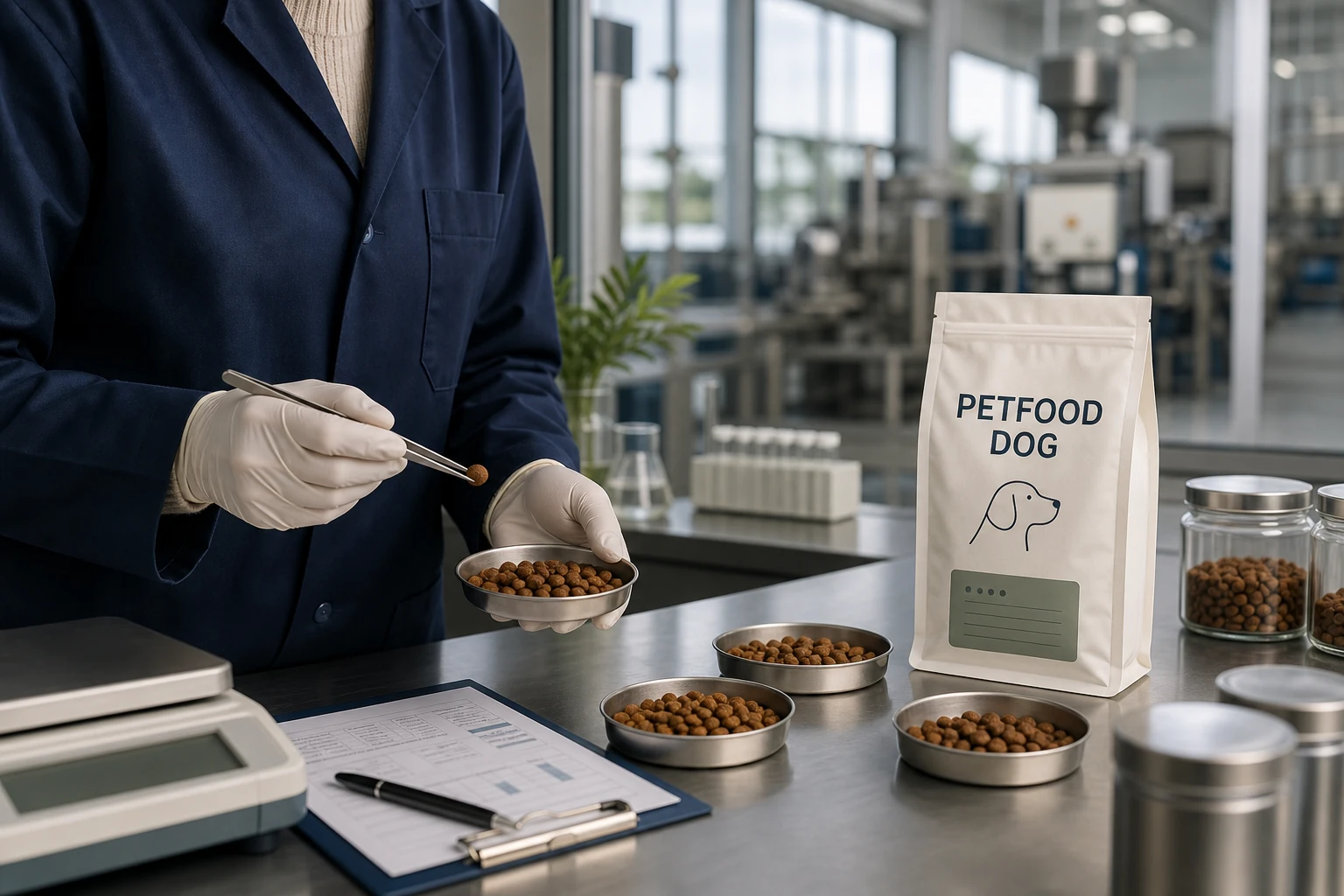
Compliance must be checked early
In B2B pet food, compliance is not a final administrative step. It influences supplier selection, target country, packaging, claims and buyer confidence.
Before listing a range, ask for clear information on composition, analytical constituents, feeding guidelines, traceability, batch management and manufacturer contact details.
Documents that help buyers decide
A serious file may include technical sheets, nutritional information, available quality certificates, storage conditions, manufacturing data, packaging visuals and logistics information.
Many European manufacturers use FEDIAF nutritional guidelines as a reference framework for complete and complementary foods for dogs and cats. They do not replace legal validation, but they help align discussions.
Compliance also supports sales
A clear, documented and well-presented range reassures professional buyers. It limits late-stage blockers and avoids packaging or listing issues.
The pet food quality and compliance page presents the points to frame before supplier discussions.
Key takeaway
A strong pet food project combines a clear product, a reliable supplier, controlled compliance and an offer that is easy to sell.