Start with a clear positioning
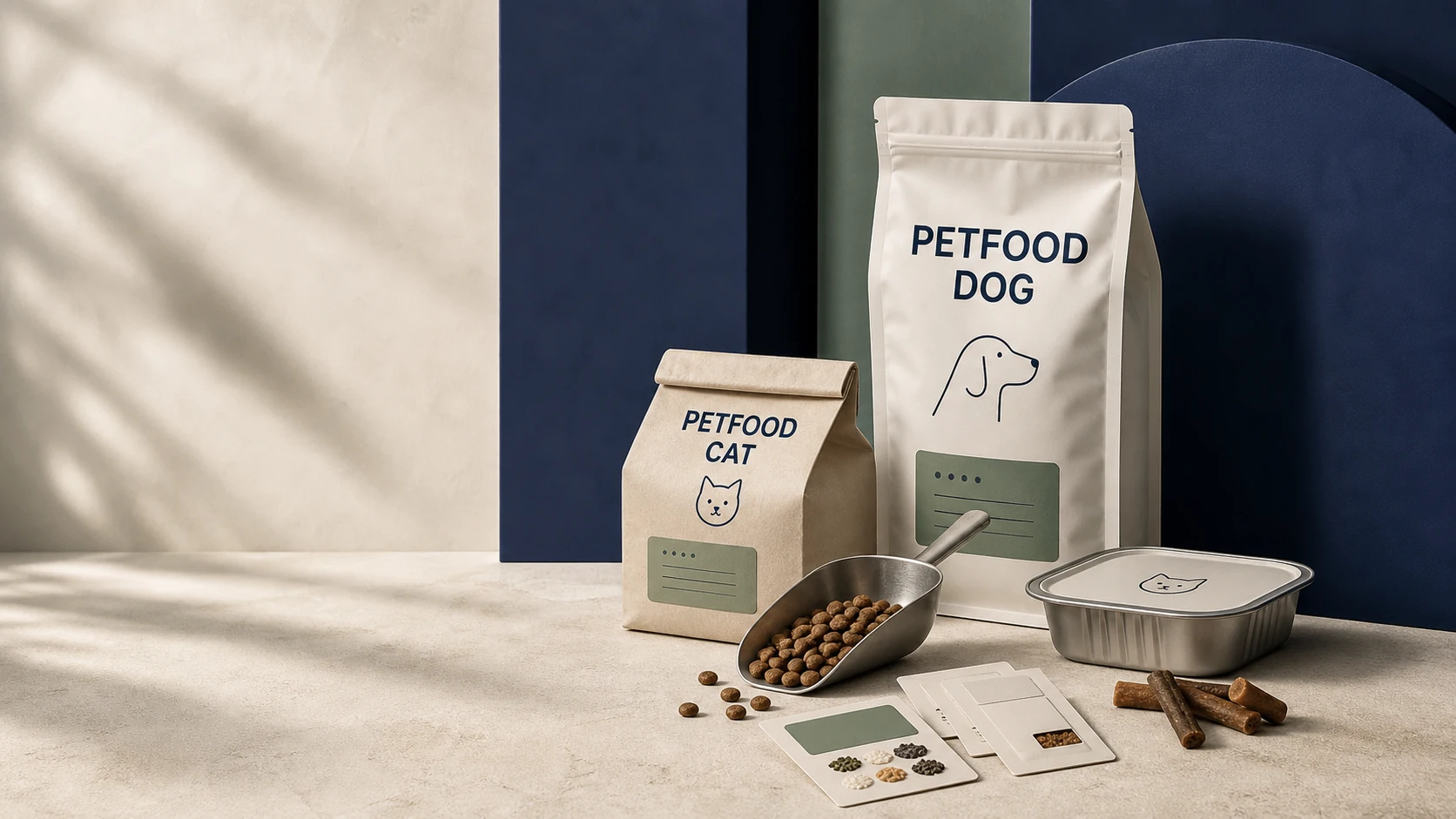
A private-label dog or cat food range is more than a logo on a bag. It needs a defined role in the assortment: credible entry price, profitable mainstream range, specialist premium line or short high-rotation offer.
A frequent mistake is to request an ambitious recipe before checking target price, MOQ, bag format and sales channel. A strong private label balances product benefit, margin, industrial feasibility and shelf clarity.
Prepare a useful industrial brief
Manufacturers need concrete information: species, life stage, positioning, protein level, grain policy, bag format, annual volumes, sales countries, labelling languages, packaging requirements and timing.
The clearer the brief, the easier it is to get meaningful feedback on feasibility, minimum orders, lead times, packaging constraints and alternative routes.
From recipe to sellable offer
A private-label range must be easy for buyers and sales teams to explain. The strongest arguments are practical: nutrition benefit, manufacturing origin, palatability, price, format and use case.
Petfood Sourcing can help frame the range, identify industrial partners and assess commercial feasibility. See private label pet food Europe.
Key takeaway
A strong pet food project combines a clear product, a reliable supplier, controlled compliance and an offer that is easy to sell.